Alexander the Great Marathon 2027: race guide
The 21st Alexander the Great International Marathon is scheduled for Sunday, 4 April 2027, starting in Pella — the birthplace of Alexander the Great — and finishing in Thessaloniki, according to the future-dates calendar published by AIMS and confirmed independently by Greek running media; the organiser's own site has not yet published a dedicated 2027 event page. Besides the full Marathon, the event includes 10 km and 5 km road races and a 1 km race for primary-school children. It has run since 2006, is an AIMS member, no other marathon anywhere is allowed to use the "Alexander the Great" name according to the organiser itself, and it is dedicated to Stelios Kyriakidis, winner of the 1946 Boston Marathon. Below is what is already known about 2027, what has not yet been announced, the route, the race's historical identity, and how it compares to the Athens Marathon.
What it is, and when it happens in 2027
The Alexander the Great International Marathon is an annual road race starting in Pella and finishing in Thessaloniki. The 21st edition is scheduled for Sunday, 4 April 2027 — the date that appears on the future-races calendar published by AIMS (the Association of International Marathons and Distance Races, the body this race belongs to) alongside the race's already-scheduled 2028-2031 dates, and it is independently confirmed by an iRun report dated 9/6/2026.
The organiser's own site (atgm.gr, which alexanderthegreatmarathon.org redirects to) did not, as checked on 29/9/2026, carry a dedicated page for the 2027 edition; the most recent update in its own news feed concerns the 20th edition, held on 26 April 2026 — which, as of today, has already taken place. We state this explicitly as a gap, not as something the organiser has already confirmed in its own words.
Beyond the full Marathon (42.195 km), the event includes a 10 km race, a 5 km race, and a 1 km race for primary-school children.
The route: Pella to Thessaloniki
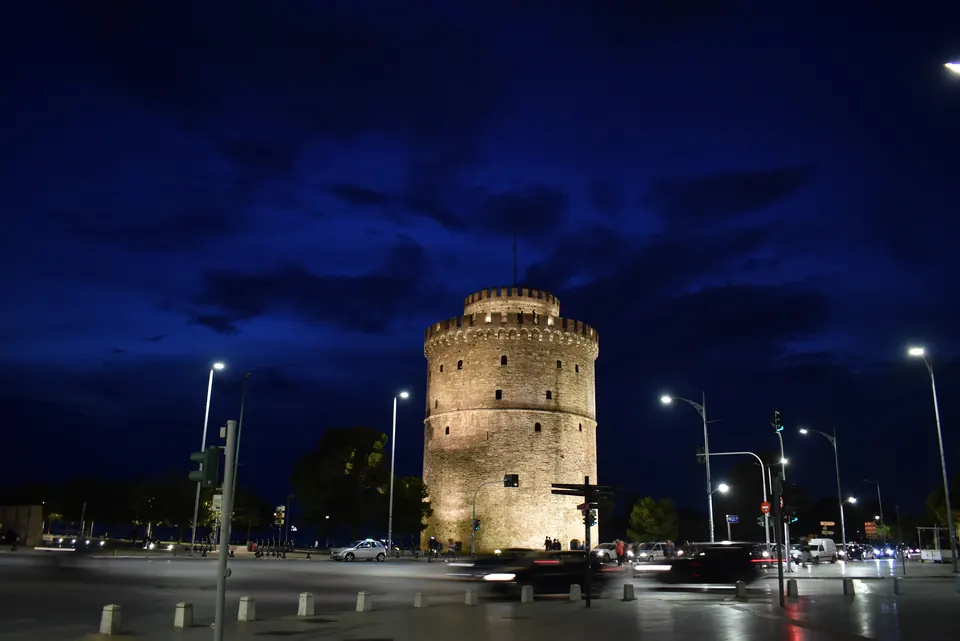
The route starts in Pella — the ancient capital of Macedonia and Alexander the Great's birthplace — and finishes in Thessaloniki, the modern capital of the region, passing through Chalkidona, Gefyra, Ionia and Kordelio, and crossing the Axios and Gallikos rivers.
It is a low-difficulty route with minimal elevation changes — a feature that, per the race's own description, favours fast times. Along the route, aid stations provide water, food, medical coverage and other runner support (the exact current count is not confirmed on the organiser's live route page; '15' comes from Wikipedia only).
21 years: from 2006 to today
The first Alexander the Great International Marathon was held on 16 April 2006. The event runs under the patronage of the Hellenic National Committee for UNESCO, the Hellenic Olympic Committee and SEGAS (per the organiser's own pages), and is organised by the athletics club MEAS TRITON Thessaloniki. It is an AIMS member, and according to the event's own history page, no other marathon in the world is allowed to use the name of Alexander the Great — an exclusivity the organiser presents as a unique feature of the event.
A dedicated records article on the organiser's own site (atgm.gr, 24 April 2026) states that the Pella-Thessaloniki course record has belonged since 2006 to Kenya's Moses Arusei, at 2:11:37, and, also since 2006, to Algeria's Souad Aït Salem in the women's race, at 2:28:22 — records that, in the article's own words, have stood "since the event was created." The same article gives the Greek national record for this race (Fotis Zisimopoulos, 2:23:40, 2024; Magda Gazea, 2:41:26, 2013) and names Dimitris Tsiounis (4 wins, 2007-2012) and Sonia Tsekini (3 wins, 2017/2019/2021) as the race's most successful athletes. Separately, a Wikipedia summary (English and Greek, cross-checked against each other) states the race received an IAAF/World Athletics Bronze Label in 2010 and 2011 — a detail not found on any organiser page in this round of research, and reported here explicitly as third-party information.
Why "Alexander the Great": the race's historical identity
The organiser's own history page explains that the route symbolically connects "the ancient capital of Macedonia and birthplace of the Great Commander" (Pella) with "the modern capital of Macedonia" (Thessaloniki). Later ancient biographers — chief among them Plutarch, who wrote his Life of Alexander roughly four centuries after the events — record that Alexander III of Macedon was born in Pella in 356 BC, a capital his father Philip II had established for the kingdom of Macedon.
The organiser frames the race as "a path in history, a path in ancient Greek culture," built around the figure of Alexander rather than around any single battle or dated event — in contrast, as explained below, to the story behind the word "marathon" itself.
Alexander the Great, not Pheidippides: a different historical hook
The word "marathon" itself comes from the Battle of Marathon in 490 BC and the legend of the runner Pheidippides. Herodotus, writing close to the events, records a runner (Pheidippides or Philippides, depending on the manuscript) sent from Athens to Sparta before the battle to ask for help — not the more famous Marathon-to-Athens route with the announcement of victory and the runner's death at the finish, which appears only in much later writers such as Plutarch and Lucian, centuries afterward.
Alexander the Great was born in 356 BC, more than 130 years after the Battle of Marathon, and has no documented historical connection to Pheidippides or to that battle. This particular race borrows only the modern "marathon" distance and format (a distance formally standardised in the early 20th century), but builds its own identity entirely around Alexander the Great and the Pella-Thessaloniki connection — a distinct historical hook, not a variation on the Marathon-Pheidippides story.
Northern Greece's marathon versus the Athens Marathon
The Athens Marathon ("The Authentic") is run in November in Attica, on the historic Marathon-to-Athens route that directly references the Battle of Marathon and the Pheidippides legend. Alexander the Great runs in spring (April) in Northern Greece, on an entirely different route and geography — Pella to Thessaloniki, in Central Macedonia.
With 21 editions by 2027, broad international recognition through AIMS, and "International" written into its own official name, Alexander the Great functions as Northern Greece's big, established marathon — the regional counterpart to the role the Athens Marathon plays for Attica, without the two sharing a historical narrative, season, or route.
Dedicated to Stelios Kyriakidis
Since the 11th edition, on 3 April 2016, the Alexander the Great International Marathon has been officially dedicated to Stelios Kyriakidis, the Cypriot-Greek runner who won the 1946 Boston Marathon — a victory that, according to the event's own announcement, established him as "the first and most important sports hero of post-war Greece," largely because of the humanitarian aid he was able to mobilise for the country after his win.
Kyriakidis also has his own dedicated profile article on bib2bib, with his full story documented from primary sources; here we note only his direct connection to this specific race, not his complete biography.
Registration, and what is still unannounced for 2027
As of when this guide was checked (29 September 2026), registration for the 4 April 2027 race had not yet opened. An iRun report dated 9/6/2026 stated that "registrations for the 4 April 2027 race will open soon" — no newer public update was found as of this guide's 29/9/2026 check.
Not yet publicly available, specifically for the 2027 edition: the exact entry fee per distance, the registration deadline, exact start times per distance, and any changes to the route or aid stations compared with previous editions. Anything published earlier for a prior edition (for example the 2026 race) is not stated here as applying to 2027, precisely because the organiser has not yet repeated it for the new year.
Frequently asked questions
When is the Alexander the Great Marathon in 2027?
Sunday, 4 April 2027, per the AIMS future-races calendar and an independent iRun report (9/6/2026); it is the 21st edition.
What is the route?
From Pella (Alexander the Great's birthplace) to Thessaloniki, via Chalkidona, Gefyra, Ionia and Kordelio, crossing the Axios and Gallikos rivers.
What distances does the event offer?
A Marathon (42.195 km), a 10 km race, a 5 km race, and a 1 km race for primary-school children.
Why is it called "Alexander the Great"?
Because the route starts in Pella, where later ancient biographers such as Plutarch record that Alexander III was born in 356 BC, and finishes in Thessaloniki, the modern capital of Macedonia.
Is it related to the Pheidippides legend?
No. Pheidippides is tied to the Battle of Marathon in 490 BC and to the Athens Marathon. Alexander the Great was born more than 130 years later and has no documented connection to that story.
How does it differ from the Athens Marathon?
The Athens Marathon runs in November in Attica, on the historic Marathon-to-Athens route. Alexander the Great runs in spring in Northern Greece, Pella to Thessaloniki, and is the region's big, established race.
Has registration opened for 2027?
No, as checked on 29/9/2026. The organiser is reported as saying entries will open "soon," per iRun.
Who is Stelios Kyriakidis, and why is he connected to this race?
A Cypriot-Greek runner who won the 1946 Boston Marathon. Since the 11th edition (2016), the Alexander the Great Marathon has been officially dedicated to him.